Monday, February 21, 2022

THE RICH FAMILY IN OUR CHURCH

3871

I'll never forget Easter 1946. I was 14, my little sister Ocy 12, and my older sister Darlene 16. We lived at home with our mother, and the four of us knew what it was like to do without many things. My dad had died five years before, leaving Mom with seven school kids to raise and no money. By 1946, my older sisters were married, and my brothers had left home.

A month before Easter, the pastor of our church announced that a special Easter offering would be taken to help a poor family. He asked everyone to save and give sacrificially. When we got home, we talked about what we could do. We decided to buy 50 pounds of potatoes and live on them for a month. This would allow us to save $20 of our grocery money for the offering. Then we thought that if we kept our electric lights turned out as much as possible and didn't listen to the radio, we'd save money on that month's electric bill. Darlene got as many house and yard cleaning jobs as possible, and both of us baby sat for everyone we could. For 15 cents, we could buy enough cotton loops to make three potholders to sell for $1. We made $20 on potholders.
That month was one of the best of our lives. Every day we counted the money to see how much we had saved. At night we'd sit in the dark and talk about how the poor family was going to enjoy having the money the church would give them. We had about 80 people in our church, so we figured that whatever amount of money we had to give, the offering would surely be 20 times that much. After all, every Sunday the Pastor had reminded everyone to save for the sacrificial offering.
The day before Easter, Ocy and I walked to the grocery store and got the manager to give us three crisp $20 bills and one $10 bill for all our change. We ran all the way home to show Mom and Darlene. We had never had so much money before. That night we were so excited we could hardly sleep. We didn't care that we wouldn't have new clothes for Easter; we had $70 for the sacrificial offering. We could hardly wait to get to church! On Sunday morning, rain was pouring. We didn't own an umbrella, and the church was over a mile from our home, but it didn't seem to matter how wet we got. Darlene had cardboard in her shoes to fill the holes. The cardboard came apart, and her feet got wet, but we sat in church proudly, despite how we looked. I heard some teenagers talking about the Smith girls having on their old dresses. I looked at them in their new clothes, and I felt so rich.
When the sacrificial offering was taken, we were sitting on the second row from the front. Mom put in the $10 bill, and each of us girls put in a $20. As we walked home after church, we sang all the way. At lunch, Mom had a surprise for us. She had bought a dozen eggs, and we had boiled Easter eggs with our fried potatoes!
Late that afternoon the minister drove up in his car. Mom went to the door, talked with him for a moment, and then came back with an envelope in her hand. We asked what it was, but she didn't say a word. She opened the envelope and out fell a bunch of money. There were three crisp $20 bills, one $10 bill, and seventeen $1 bills. Mom put the money back in the envelope. We didn't talk, but instead, just sat and stared at the floor. We had gone from feeling like millionaires to feeling like poor white trash.
We kids had had such a happy life that we felt sorry for anyone who didn't have our mom and dad for parents and a house full of brothers and sisters and other kids visiting constantly. We thought it was fun to share silverware and see whether we got the fork or the spoon that night. We had two knives which we passed around to whoever needed them. I knew we didn't have a lot of things that other people had, but I'd never thought we were poor. That Easter Day I found out we were poor. The minister had brought us the money for the poor family, so we must be poor.
I didn't like being poor. I looked at my dress and worn-out shoes and felt so ashamed that I didn't want to go back to church. Everyone there probably already knew we were poor! I thought about school. I was in the ninth grade and at the top of my class of over 100 students. I wondered if the kids at school knew we were poor. I decided I could quit school since I had finished the eighth grade. That was all the law required at that time.
We sat in silence for a long time. Then it got dark, and we went to bed. All that week, we girls went to school and came home, and no one talked much. Finally on Saturday, Mom asked us what we wanted to do with the money. What did poor people do with money? We didn't know. We'd never known we were poor.
We didn't want to go to church on Sunday, but Mom said we had to. Although it was a sunny day, we didn't talk on the way. Mom started to sing, but no one joined in and she only sang one verse. At church we had a missionary speaker. He talked about how churches in Africa made buildings out of sun-dried bricks, but they need money to buy roofs. He said $100 would put a roof on a church. The minister said, "Can't we all sacrifice to help these poor people?"
We looked at each other and smiled for the first time in a week. Mom reached into her purse and pulled out the envelope. She passed it to Darlene. Darlene gave it to me, and I handed it to Ocy. Ocy put it in the offering plate. When the offering was counted, the minister announced that it was a little over $100. The missionary was excited. He hadn't expected such a large offering from our small church. He said, "You must have some rich people in this church."
Suddenly it struck us! We had given $87 of that "little over $100." We were the rich family in the church! Hadn't the missionary just said so?
From that day on I've never been poor again. I've always remembered how rich I am because I have Jesus!
by Eddie Ogan


Thursday, February 17, 2022

LOOKING FOR THAT ONE

 3870


I was watching a movie today about a military doctor who was assigned a patient with severe dental and lip injuries; as a result of an automobile accident.


    This surgeon took extraordinary measures to assist his patient, and spent multiplied hours planning the initial, and subsequent operations. Never in his surgical career had he felt such empathy for a patient. Never in his life had he devoted such caring effort, or taken his responsibility so much to heart.


     And though the young woman was gruesome to behold, and though her injuries were the worst he’d ever witnessed, he painstakingly went about his task. And for those several months and years he assumed a duel role; that of physician and prophet. For he could see the invisible as though it was visible.


    The young woman often lashed out at him, wavering between despondency, anxiety, discouragement and outright rage. But nothing deterred him from his task, and over the course of years he performed surgery after surgery. And with each operation his dream took shape, and his young client seemed more confident about the ultimate result.


    More than once someone accused the doctor of playing God. And though their remarks were critical in tone, the physician chose to regard them as compliments.


     And what of the young lady, the recipient of all his skill and labor? Her facial deformities became less obvious, less hideous to those who beheld her. And with time the results of her unfortunate accident were almost imperceptible, until all that was left was a slight scar on one edge of her recreated lips.  And her joy and the corresponding joy of her surgeon overflowed, and seemed to fill up the world around them. She was whole again. Her shame was vanquished. 


     And I think I forgot to tell you. Before her injury, our little heroine had been a military nurse. And she returned to her duties with more vigor and more enthusiasm than she had ever felt before. For having once been a patient, she could empathize far better than most.


    I’ve been thinking a lot about that “playing God” analogy, and at first glance it’s a repugnant characterization, since there’s One God and I’m not Him. But that old adage, “Some people have to have a God with flesh on” rings true. We have been given a rare opportunity; an opportunity to play both prophet and God, and I say that with all due respect, and submission to the only One and True God.


     There are those in our midst who will never excel, nor attempt to do so. There are those in our company who will be content to squander their God-given hopes and dreams. There are those who will make the cemetery richer; for the local cemetery is among the richest pieces of ground on earth. It is filled with all the unexplored and unfulfilled dreams of thousands of God’s creations; lying dormant, never to find fruition.


      My message to you tonight is to look for that one; that one person among many who displays the kind of unexplored, just under the surface potential to be singular, to be great, to be used of Our Lord. Look for that man or woman who can be shaped, molded, impacted; for that one who, though sick, or sad, or even selfish has a pliable and contrite spirit, and who is increasingly ready to assume their God-given place on the earth.


     Inscribed on the Statue of Liberty is a verse: “Give me your tired, your poor, your huddled masses yearning to breathe free, the wretched refuse of your teaming shore. Send these, the homeless tempest tossed to me. I lift my lamp beside the golden door.” (Emma Lazarus)


     Our mission is to people like that. The tired, the poor, the huddled masses, the wretched refuse, the homeless. And we have a lamp to light their pathway. And we offer them a golden door; a door that leads to freedom.


     But many will refuse our comfort, and many will drift away. But if we can touch just one at a time. We may not be able to change the world, but we may be able to change the world of one person. Pour your efforts into all who seek help, who pleads for deliverance. Do this. Do this.


   But look for that one; that one who seems to provoke you to do a little more. That one who not only needs a little more attention, but who, by words or action, places themselves in your hands, and bids you mold them into something lovely. Look for that one.


     For you are both a physician and a prophet. So reminiscent of that doctor who bestowed his best labor on the little patient, earlier in this story. God calls you to pour healing suave in their wounds. He gives you dreams in the night on their behalf, and provokes you to see the invisible and impossible. You are a both a physician and a prophet.


     Look for that One, that One who seems to provoke you to do a little more. That One who not only needs a little more attention, but who, by words or action, places themselves in your hands and bids you mold them into Something lovely. Look for that One.


William McDonald, PhD. Copyright pending


Tuesday, February 15, 2022

I'LL BE RIGHT BACK!

3869

Several years ago, my wife and I attended a Ruth Graham seminar on the west coast of Florida. And as I recall, the multi-hour event included elective segments on any of a number of topics, and with such speakers as Damaris Carbaugh, the mother of Ellen Degeneres’ former girlfriend, (who was decidedly against the gay agenda), and of course, (it goes without saying) Ruth Graham, herself.

Well, for anyone who has known me very long, it should also “go without saying” that I didn’t drive an hour there, and an hour back, not to make Ruth Graham, the daughter of the famous evangelist, Billy Graham, my priority.

Apparently, one segment Jean and I attended finished early, and (also apparently) my wife got involved elsewhere, since I headed over to the main convention hall to get a “good seat.” And (you guessed it) Ruth Graham was scheduled next on the, well, schedule.

It can safely be said that I did, indeed, get a good seat since when I walked into the auditorium I found myself completely

… alone.

And since I had a few hundred seats from which to choose, I walked towards the front of the theater, and took a seat in the 3rd row, center. (I simply don’t sit on the first row of a theater, church, auditorium, or fill in the blank. Somehow, it seems a bit comforting, if that is the word, to have something in front of me, and not, as it were, to have my legs hanging out in midair).

At any rate, as I sat waiting for Ruth Graham to make her debut, who should appear but, (you guessed it)

… Ruth Graham.

Ruth, (if I may be so bold to call her by her given name) came striding across the floor from right stage towards the left, and had walked perhaps ten feet when she saw yours truly seated in Row 3, Center. Suddenly, the young lady, (younger than me, and definitely younger than she is now) stopped, and said,

“I’ll be right back!”

As I recall, I sheepishly responded with,

“Uh, Okay.”

The well-known daughter of an even better-known father. The never-to-be-well-known, except in his little corner of the world, pastoral counselor.

Interacting at that moment, at least, on the same level. (Well, to be fair she was up on a stage, but you see where I’m going). We momentarily engaged one another as if we were acquainted.

I refer to such scenarios as

“creating memories.”

And though, if you asked her, Ruth may have long since forgotten that momentary exchange,

… I never will.

by William McDonald, PhD

Sunday, February 13, 2022

THE COMPELLING CASE OF PHARAOH'S DAUGHTER

3868


I like to think I am well-versed in Judeo-Christian scripture. However, I “ran across” a bit of biblical history this week with which I was totally unfamiliar.

But allow me to begin at the beginning.

I attended a church Sunday in which I will be serving as a pastoral counselor, and I was provided the opportunity to share my ministry with the congregation. Having shared my mission with the parishioners, I sat down, and prepared to listen as the Pastor waxed eloquent. I was not disappointed.

Following is his initial scripture text from the Book of Exodus, Chapter 2:1-10

“Now a man of the tribe of Levi married a Levite woman, and she became pregnant and gave birth to a son. When she saw that he was a fine child, she hid him for three months. But when she could hide him no longer, she got a papyrus basket for him and coated it with tar and pitch. Then she placed the child in it and put it among the reeds along the bank of the Nile. His sister stood at a distance to see what would happen to him.

“Then Pharaoh’s daughter went down to the Nile to bathe, and her attendants were walking along the riverbank. She saw the basket among the reeds and sent her female slave to get it. She opened it and saw the baby. He was crying, and she felt sorry for him. ‘This is one of the Hebrew babies,’ she said.

“Then his sister asked Pharaoh’s daughter, ‘Shall I go and get one of the Hebrew women to nurse the baby for you?’

“‘Yes, go,’ she answered. So, the girl went and got the baby’s mother. Pharaoh’s daughter said to her, ‘Take this baby and nurse him for me, and I will pay you.’ So, the woman took the baby and nursed him. When the child grew older, she took him to Pharaoh’s daughter and he became her son. She named him Moses, saying, ‘I drew him out of the water.’”

Pt. 2

I find it interesting that in the preceding passage of scripture, four of the five primary characters go unnamed. The baby in the basket is none other than Moses. His father is Amram. His mother is Jochebed. His sister is Miriam. We learn the identity of Pharaoh’s daughter a bit later.

One of the best known persons in ancient Egypt has gone down to the Jordan River to bathe, when she notices a basket floating in the reeds. With this, she sends one of her attendants to fetch it.

And it is here that the providence of Almighty God begins to play itself out. Of course, Pharaoh has pronounced an edict that the newborn sons of the Hebrews should be killed; (and, no doubt, some were, though many were spared by midwives who feared God, and disobeyed the king’s order).

However, Pharaoh’s daughter, (we shall get to her given name soon), is compelled to ignore her father’s edict. (A tendency she will embrace and emulate the remainder of her natural life).

Moses’ sister Miriam ‘just happens’ to be standing nearby, and she asks Bithiah, (for this is her name), if she’d like her to locate a Hebrew woman to nurse the little fella for her. Of course, unbeknownst to Princess Bithiah, Miriam is Moses’ sister, and the chosen wet nurse is none other than Moses’ and Miriam’s mother.

It occurs to me that in our day and time had Jochebed put Moses in a basket and sent him floating down a nearby river, well, she would, no doubt, be arrested for child endangerment. However, the authorities in our day and time could not have factored in the foreknowledge and wisdom of God in this perilous time when every male child of Israel was a cat’s whisker away from death.

Pt. 3

The scripture is not clear about the length of time which transpires during which Jochebed nurses baby Moses, nor the additional years he may have spent with his natural mother prior to being returned to Princess Bithiah, the daughter of Pharaoh.

Talk about providence! Bithiah has unknowingly, unintentionally returned the little river waft to his biological parents for a season. And during this season, the Hebrew toddler is, as it were, stamped with the official seal of the ruler of all Egypt, and is, as a result, immune to the awful fate which befalls thousands of other little Jewish boys.

However, (and it’s a very big ‘however’), I am convinced that during this time frame, Jochebed and Amram are diligent in obeying the command in the Book of Deuteronomy, Chapter 11:18-21

“ Fix these Words of mine in your hearts and minds; tie them as symbols on your hands and bind them on your foreheads. Teach them to your children, talking about them when you sit at home and when you walk along the road, when you lie down and when you get up. Write them on the doorframes of your houses and on your gates, so that your days and the days of your children may be many in the land the Lord swore to give your ancestors, as many as the days that the heavens are above the earth.

And not only am I convinced that Moses’ parents are diligent to share the life-changing Words of the Creator with their little boy, I am equally convinced that when the son of Jochebed and Amram is returned to Bithiah, God uses him to desperately impact his Egyptian step-mother; by his words, mindsets, attitude and behavior.

Pt. 4

Of course, it will be decades before the “I AM” of both our earthly and heavenly existence begins to ‘show out’ in the life of Moses. But ‘show out’ He will. And ‘show out’ He does!

Who can forget the burning bush? Who can forget God’s command to Moses? Who can forget Moses’ ultimatum to Pharaoh?

We cannot be sure who serves as Pharaoh during the time of the Exodus. However, it seems very likely that he is related to Bithiah, Moses’ step mother, and that he is related by adoption to Moses, himself!

Of course, it is only natural to wonder what has become of Bithiah, the Egyptian princess, during the long years of Moses’ obscurity. Has she been lost to history, or does scripture provide us any further information about her fate? Perhaps the previous question is a bit rhetorical in nature since after half a lifetime, Bithiah “shows up” again.

It goes without saying that the pressure on this Egyptian princess to conform to royal expectations and accepted values must be extreme. But yet, tradition tells us that (drum roll) Bithiah’s biological son is the one and only Egyptian firstborn male who escapes the Death Angel; when he passes by in the dark of the night. Where ever the princess and young prince happen to be at that moment, it seems obvious that Moses has forewarned them of the impending doom of the firstborn sons of Egypt, and has pleaded with his stepmother to observe the life-saving ritual of the lamb’s blood. So reminiscent of Pharaoh’s order that the newborn sons of Israel should be killed, and the grace which befell many of them when they were spared by conscientious midwives. And oh, the irony. Whereas, the princess had saved Moses from the wrath of the king, her own son had been spared from the wrath of THE KING.

Pt. 5

There is an interesting passage of scripture in the Book of Hebrews Chapter 11:24-26

“ By faith Moses, when he had grown up, refused to be known as the son of Pharaoh’s daughter. He chose to be mistreated along with the people of God rather than to enjoy the fleeting pleasures of sin. He regarded disgrace for the sake of Christ as of greater value than the treasures of Egypt, because he was looking ahead to his reward.”

Yes, Moses has long since made a decision to renounce the trappings of royalty, and it seems he sets a very high standard for his stepmother Princess Bithiah, and his unnamed Egyptian stepbrother.

For we have this curious little passage in 1st Chronicles Chapter 4:18 which, as Paul Harvey was prone to say, clarifies “the rest of the story,” and settles it once and for all for us. Speaking of those people who walked across the temporary pathway which appeared beneath the turbulent waves of the Red Sea; (and which when Pharaoh and his soldiers attempted to do were drowned)…

“And these are the sons of Bithiah, the daughter of Pharaoh, which Mered, (the Hebrew) took for himself.”

For you see, this former Princess of Egypt has renounced the riches and titles of Egypt, has embraced God and the people of God, and walked away from those whom she knew and loved.

We know so little about Princess Bithiah, as comparatively little has been written about her. But I think, I think this unsung hero deserves a place in the Old Testament Hall of Honor alongside other Gentile saints such as Ruth and Rahab.

I can think of no one who exemplifies Hebrews Chapter 11 Verse 1 any better than this dear saint of God.

“Now faith is the substance of things hoped for, the evidence of things not seen.”

For faith compelled her to renounce that which was tangible, though temporary, in favor of that which she could not see, but which she was assured was eternal in the heavens.

 by William McDonald, PhD. Copyright pending

Friday, February 11, 2022

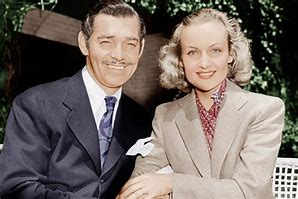
THE DAY CLARK & CAROL CRIED


3867

The year was 1938. Walt Disney and his crew of sketch and color artists, animators, cameramen, and sound people had just finished the innovative, “Snow White and the Seven Dwarfs.”


As Mr. Disney, (“Walt” to his employees) took his seat in Radio City Music Hall perspiration dripped from his brow, and he was filled with anxiety. Over the past three years hundreds of those whom he referred to as his “boys and girls” had produced 200,000 colorized sketches, spliced them into a seamless whole, and added sound; sound as rich as the color applied to the cartoon characters.


Before the feature length production began, Clark Gable and Carol Lombard entered the well-known theater, and sat down.


And the feature length film started.


From the opening scene Walt Disney sensed a dynamic in the building which he’d never before experienced. A bit of his anxiety dissipated, but he was not yet ready to congratulate himself. And then. And then, the climax. It was “make it or break it” time, and he knew it.


As Snow White received the apple from the wicked queen, bit into that awful fruit, and dropped to the floor


… silence.


As the heroine of the story lay stone dead, and laid out on a bier, and Doc, Dopey, Bashful, Grumpy, Sneezy, Sleepy and Happy wept great and copious tears, the audience reciprocated, and did the same! (It was reported that Clark Gable and Carol Lombard wept along with them).


Of course, as students of Disney filmology, you and I know that Snow White didn’t stay dead, but rather, our noble prince revived her with a kiss. And they rode off into the sunset. As heartbreaking as the initial reaction, so also was the joy of the subsequent response.


Applause! Cheers! Abject Joy!


“Snow White and the Seven Dwarfs” ran an almost unprecedented 5 weeks at Radio City, and was featured at many other theaters throughout the nation. During the course of its run, and as the most horrific scenes played out, young (and perhaps not so young) children wet the seat cushions, and some ran screaming from the theater. In today's revenue, the movie grossed over 100 million dollars.


… All for a cartoon!


In the heart of every man, woman and child exists, at least for a few brief moments in time, the wherewithal to suspend credulity in favor of something mythological and magical.


In a world as troubled as ours, we need a few more magic wands and flying carpets to transport us to places we otherwise might have never had the opportunity to visit. 

By William McDonald, PhD

Thursday, February 10, 2022

OUR PARTICIPATION

3866

A few years ago, I was watching an interview between an anchorman and a priest on FOX news, and the topic happened to be the late Pope, John Paul II, who had only just passed away.

The priest began to speak about the sufferings of the pope, how that after the assassination attempt he suffered pain the rest of his life, and as John Paul aged he developed Parkinson's Disease which proved to be extremely debilitating, as well. And yet for all his suffering, this priest continued to travel, and minister to his people.

Near the end of the interview the Catholic cleric quoted Colossians 1:24, "Filling up in my own body the unfinished sufferings of Christ."

And the newsman responded, "I don't understand. What is unfinished about Christ' sufferings?"

To which the kindly priest, with a sad twinkle in his eye, responded...

"…Our Participation.”

Too few believers grasp or appreciate the wherewithal we have been given to suffer with Him. Not that we desire it or seek it, but when it comes, we bear faithfully with it, and gladly participate in that unfinished suffering which He so nobly began

Bill McDonald, PhD

OH YES, HE CARES

3865

Romans 15:13 Now the God of hope fill you with all joy and peace in believing, that ye may abound in hope, through the power of the Holy Ghost.


I heard a story about a man who was imprisoned during Napoleon's reign. While sulking in his dungeon one day, he etched on the wall the words "Nobody Cares".

A few weeks later, through a crack in the dungeon floor, a little green shoot sprang forth, reaching toward the tiny ray of sunlight that came from his small prison cell window. The prisoner began giving a portion of his daily water to the little shoot and it began to grow. One morning the man awoke to a beautiful flower. A tear rolling down his face, he crossed out the words, "Nobody Cares" and replaced them with "God Cares."

The story goes on to tell that His devotion to the flower was reported to the Empress Josephine. She was so very moved that she convinced Napoleon to set the man free.

How many times do we feel like "Nobody Cares"? God has planted little shoots of hope in each and every one of our difficult circumstances -- do you know that? Perhaps we're stepping on them, not even noticing they exist. Perhaps we're pulling the shoots before they spring forth into beautiful flowers.

God wants us to be released from our prisons of despair. Look around! See what God has planted since the beginning of time especially for us today. Be encouraged!