Saturday, February 26, 2022

FAIRY TALES CAN COME TRUE


3875

When I was little my mother told me about the time she and her friends climbed up to a beer billboard and threw snowballs at people passing by. Not long after I heard the story a huge billboard of Tom Selleck went up in Times Square. He was dressed in a cowboy hat and a tuxedo and grinned out at me from a red sports car with a Chaz license plate.


I wanted to climb up there, not to throw snowballs but just to sit.


Alas, neither my mother nor I could find a way to climb up and I figured the police were a lot more observant now than they had been when my mom was a kid. Reluctantly I surrendered my fantasy of sitting next to Tom Selleck.


Fast forward to Labor Day forty years later. I was seated in the American First Class Lounge awaiting my flight from LAX to JFK.


Flipping idly through the LA Times I looked up when I heard a familiar voice. Tom Selleck had entered the lounge and taken a seat not ten feet from me. My heart banged; maybe I would get a chance to talk to him and this time, really do it.


See, I had had chances to talk to him before; his television series about Las Vegas shot on Jamie’s lot and whenever I was there, I would ask casually whether they were on set that day. Jamie answered every query with a scowl that would have melted the abominable snowman, so I never visited the set.


One afternoon I asked Jamie’s close friend Robert Santoro, a Teamster captain who worked on the show, what Mr. Selleck was like. He assured me that he was very nice and wouldn’t mind signing an autograph for my mother and me. At that Jamie raised one eyebrow. “She won’t get the opportunity to find out,” he stated firmly, facing Robert but really talking to me. “He is on this lot to work not to entertain fans.” As he returned to the papers stacked on his desk, I resisted the urge to stick out my tongue like Lucy Ricardo and instead looked sadly at Robert. He shrugged helplessly.


Well, today was the day to test Robert’s hypothesis. Since Mr. Selleck was not here to work and he wasn’t with his family, I would see just how nice he was. I dug in my purse for a pen and a scrap of paper and approached him. Planting myself directly in front of him, I “ahem”med loudly. He raised his eyes over his reading glasses.


“Mr. Selleck,” I began. “My mom and I have had a crush on you since you were the Chaz man. May I please have your autograph for her?”


He smiled slightly and reached up. “What is your mother’s name?”

he asked kindly. I told him.


He wrote then handed me the paper.


I accepted it then said, “You know, when I was a little girl there was a billboard of you in Times Square. It was the last shot in the commercial where you roped cows . . .”


“Steer.”


“What?”


“Steer. They’re not cows, they’re steer.”


“Oh. Okay, steer. Then you showered and dressed in a tux and climbed into that red Corvette. . . ”


“It was a Ferrari.”


I squinted at him. “Really?”


He nodded.


“Well, I guess you can tell I grew up in New York and know nothing about either cows or cars.”


He smiled then turned as his name was called. His escort had arrived to take him to his flight.


“Well, ‘bye,” I said. “Thank you.”


He nodded, hoisted his brown leather bag, and turned away.


I looked at my watch and realized that I should get ready to walk to the boarding gate, too. I slipped the autograph into my tote bag and headed for the ladies’ room.


Within about ten minutes I was boarding my plane. Flashing my boarding pass for seat 1A at the flight attendant I turned right and saw Tom Selleck sitting in 1 B.


“Hi Mr. Selleck!” I exclaimed.


He looked up from his script and peered over his reading glasses.


“Hey, it’s Corvette Girl,” he smiled.


I tossed my carry on in the overhead bin and couldn’t stop myself from giggling as I plopped into the window seat.


“What is so funny?” my seat mate asked.


I told him about my childhood dream about climbing the Chaz billboard and sitting next to him high above Times Square.


He laughed.


“Well, today you will be higher in the air than the billboard was,” he observed.


I looked at his script. “Is that the new cop show you are going to star in?” I asked nodding at the script.


He nodded. “It looks like a really good show. I hope it does well.”


“My mom and I will watch it, although she will miss Jesse Stone. She loves those.”


“Oh, tell her that they aren’t going away. We have three more scheduled.”


“My husband will watch, too, even though you are no longer shooting on his lot.”


At his raised eyebrow I added, “My husband Jamie runs Culver where your last show shot and I always wanted to meet you and get your autograph, but he said he’d kill me if I bothered you. Robert said you wouldn’t mind but I never did, anyway. I remember one day when someone’s daughter hung around the set all day mooning after Josh Duhamel, his agent chewed Jamie’s ear off. I learned from her mistake.”


Mr. Selleck nodded. “Robert who?” he asked curiously.


“Santoro.”


“My driver?”


“Yes, he is friends with my husband.”


“You should have asked him to get it for you. I would have signed. Robert is a great guy.”


So, I sat next to Tom Selleck all the way to New York and he was charming. When he fell asleep I thought of laying my head on his shoulder and snapping a selfie but just my luck he’d be a light sleeper and I would turn into Lucy Ricardo yet again when she chats with the sleeping Van Johnson and he wakes, embarrassing her.


When we landed at JFK, Mr. Selleck’s next escort arrived to walk him from the plane to collect his luggage. Just before exiting, he turned and hugged me.


He smiled that Magnum smile, turned again, and was gone.

By Laura Cella


Monday, February 21, 2022

THE THINGS WE LEAVE BEHIND


3874

Our twenty pound Papillon, Toby, has an infuriating habit of barking at fast food workers. As a result, when my wife and I decide to do pizza or burgers for dinner, Jean lets Toby and me out as we stop to order, and I walk the little fella in the parking lot or the grassy area which borders it.

A couple of days ago, we pulled into a fast food establishment in our hometown of Bartow, Florida. And given there was a long line of cars ahead of us, I decided to walk a bit further than I am generally prone to do.

Suddenly, I was a man on an (admittedly minor) mission. For you see, about fifty yards from the restaurant stands the old Bartow Civic Center; a venue where local teens once danced, and children once swam in the outdoor pool. The old civic center remains, although a new one has long since replaced it. This building was used as a private school for several years, but now sits empty.

I presume the building and pool were built during the Great Depression. The outside walls of the edifice are adorned with what I refer to as ‘phosphate rock,’ although I suppose it would properly be called limestone. The pool was much like any other neighborhood pool of its day, except it’s perimeter walls were also made of limestone, and 5 foot long iron bars were driven along its top; a foot wide margin between each one.

The pool has been filled in now, and its 30x50 foot expanse is covered in grass. However, the walls are still there, though a few of the iron bars have been broken, and bent inwards where they meet the limestone wall, as though someone, not knowing any other way to get in, hoped to swim in a pool that no longer existed.

Pt. 2

There was a time when the building and pool were new; completed just moments ago by the hands of skilled workmen. The first quarter was yet to click its way down the metallic mechanisms of the new jukebox, and the sound of teenaged feet had not yet reverberated off the cement floor, and sheetrock walls. The bottom of the pool was still dry, and the blue aquatic paint which lined its walls was still wet.

As I reminisced about my days of yore, I found myself returning to a mental topic which had flooded my synapses many times in the past.

“The things we leave behind.”

Whereas the old civic center and what remains of the pool remain, the hands which so diligently built them have ceased their labor. The workmen who poured the concrete, who laid the blocks, and who installed the limestone have long since gone on to their reward.

Of course, the same could be said of a myriad of buildings and pools, and a million million other manmade things which were ever built, created or invented.

My dad was an artist. During the course of twenty or thirty years, he painted some pretty impressive landscapes. His paintings are scattered across central Florida, and perhaps the entire country. No sooner had he hung one in a local bank or restaurant, the phone rang, and a manager or clerk told him to come pick up his money. And while Daddy is no longer with us, several of his paintings grace my walls.

As I type out these words, a Victorian red velvet wooden chair sits not five feet behind me. It is a beautiful thing. No doubt, the workman finished hid masterpiece, and paused to admire what he had so skillfully accomplished; well over a century and a half ago.

Pt. 3

Speaking of workmen, and builders, and artists, I was never gifted with manual dexterity, and even the shadowbox I created in high school shop class was lop-sided, and I have no idea, (nor do I care) where it now resides.

However, I am a workman and builder and artist nonetheless. For you see, I trade in… souls. (Yes, I do). Souls are my workmanship, and I have been privileged to mold and shine many of them ‘til they shimmered like diamonds. For you see, I am a counselor and a mentor, and many of those whom God has set in my pathway have gone on to do wonderful things.

There was one, in particular, who summed it up well, and her words are so reminiscent of my implications here.

“Dr. Bill, I don’t want to disappoint you. I’ll go for you when you can no longer go. I’ll speak for you when you can no longer speak. I’ll reach, teach and keep people in your name long after you have gone on to your reward.”

Just as those wonderful craftsmen of old built edifices which have outlived them, I find myself doing much the same thing. For one day it will be said of me, “He left something behind.” For one day I will cease to be referred to as “He is,” and I will be remembered as “He was.”

When this workman has passed from the earth, my work will remain, and I will, in essence, continue my work through another. And they will be able to say, (as I have said before them), “I am the only reason that he ever lived and moved and breathed on the earth; (since he is incapable of doing anything more, and is depending on me to carry on what he once began”).

Afterward

I think Providence has granted all of us a destiny. And whether walls or buildings or pools or paintings or lives happen to be our calling, I think we ought to get about doing what our destiny dictates that we do.

For ultimately, there is nothing more satisfying or essential than leaving something behind.

by William McDonald, PhD

TWO PEOPLE DRIVING ONE CAR


3873

It was mid-afternoon, and Jean and I were on our way home from church, (or some other place long since forgotten.) She was driving our old green 1980 something Oldsmobile; a somewhat larger and heavier vehicle than one generally sees on the road today. We were traveling at 50 MPH, or more, and as we neared an intersecting road on our right, which was marked with a stop sign, a small blue car pulled into our pathway.

I could plainly see a man and woman in the front seat, and a little boy and girl in the back seat. I will never forget those precious little human beings as they sat there, eyes wide open, peering helplessly out the window, as our car swiftly approached them.  Less than 50 feet separated our two vehicles, and Jean proceeded to lock up the brakes. An accident was inevitable. As with so many traumatic events, time seemed to slow down. (Interestingly enough, I have read that this syndrome occurs because the brain is processing more information than usual in a miniscule amount of time.)

It was obvious that my wife had every intention of plowing headlong into the smaller car, (and no doubt, all the occupants of that vehicle would have been seriously injured or killed.) And though we were driving a much larger automobile, we also would not have been spared, since foolishly we weren’t wearing our seatbelts.

Suddenly, I just KNEW what I had to do.

I reached over with my left hand, took the steering wheel from Jean, and began steering it in a direction that would take us around the rear of the small vehicle. Amazingly, we cleared the back bumper of the little car by a foot. Both my wife and I found ourselves leaning hard in the direction of our passenger window. (As a result of that event, I can easily relate to the G-forces astronauts endure as they reach maximum acceleration.)

But our wild ride was only beginning. Our ungainly old car began a 180 degree slide. Suddenly, the back end was where the front end was just seconds before. Now we were sliding backwards. As the car lost momentum, we neared a wooden fence to our left which paralleled the side of a house. We finally slid to a stop in a grassy area, a few feet from the fence, very shaken, but not a scratch on either of us. 

As we ended our unexpected journey, I saw the little car as it turned left into the opposite lane of the four lane highway. The man didn’t even have the courtesy to stop and inquire about our well-being. The decent thing to have done, the only thing to have done, would have been to stop, especially since he had pulled in front of us, and caused a near fatal accident.

However, while this traumatic event was in the process of happening to us, another car pulled up to the stop sign. Having seen the spectacle falling together around him, I have no doubt that the driver watched in awe. The motorist asked if we were okay, and after we assured him we were, he drove away.

Only God. Only God. Nothing less than an abject miracle. The two occupants of our car and the four occupants of the other car might easily have died that day. And the spot which Jean fills in the audience tonight would be vacant, or filled by another, and I would be just as invisible now, and you would not be listening to the sound of my voice, nor been exposed to my obvious charm, or handsome face.

And I have no doubt He gave His angels charge over us that day, and when we needed a miracle, well, He gave us one. And I have no doubt, any one of you could step behind this podium and share something equally wonderful and amazing that our Lord has done in your own lives.

by William McDonald, PhD


THE ARNOLD RICHARDSON STORY (re. the last scene in "A River Runs Through It")


3872

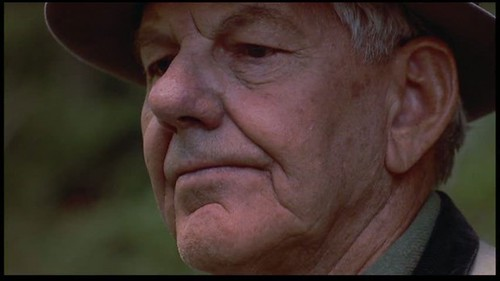
HELENA, Mont. — Arnold Richardson was not the best-known Montanan to appear in a Hollywood movie, but his solitary bit part — as the elderly Norman Maclean in "A River Runs Through It" — remains one of the most iconic cinematic images of the state, partly responsible, for better or worse, for the explosion in the popularity of fly fishing in the 1990s.

For Richardson, who retired to Townsend and died Dec. 6 at 96, the response to a casting call in a Livingston newspaper led to an enjoyable brush with fame and a well-paying job one autumn. It was also a fitting highlight in a lifetime of love for Montana's fish and streams and wild places.

"He could spend literally days on a river," his stepson, Norman Spencer, said by telephone from his home in Florida. "The whole concept was almost transcendent. ... It's almost like he was transformed when he got on a river."

"Hours would go by," Spencer said. "I'd be ready to go home. He'd still be there fishing and have no concept of what time it was. He would just really get lost in it."

It's been said, Spencer noted, that trout don't live in ugly places.

"They live in some of the most beautiful, serene areas, the mountains, in cold clean water," he said. "It's always very picturesque types of locations, where the water is always pristine. Because the fish need to have ice cold water to live."

Richardson was born in Maine in 1914 and worked with his father in construction endeavors. After he finished high school, they moved to Washington state, where the elder Richardson created a company making wooden blinds.

Arnold became a bricklayer and spent much of World War II as a civilian on government projects throughout Alaska, before moving back to Maine.

But the life of a bricklayer involved lots of travel, and some of that brought him to Montana, where he learned to fly fish in the late 1940s, Spencer said.

A big moment in his fishing life came around 1948 outside Mack's Inn, on the Henry's Fork of the Snake River in Idaho, where he caught so many fish, in such spectacular fashion, that it earned him a free T-bone steak.

"The chef told me his customers seated at the window went wild over my fishing," Richardson told the Independent Record in 2005. "He said that any time I wanted to come and fish outside the restaurant, he'd give me a free meal."

He also got work as a fishing guide, which paid more than bricklaying. He kept on guiding, and his reputation grew, into the 1950s, Spencer said.

A construction accident — an electrocution — sent him back to Maine, where he met and married Frances, Spencer's mother, in the mid-1960s. Construction work kept the family traveling, and finally they settled in Livingston in the mid-1970s, by Spencer's estimation.

There, they ran the Sherwood Inn, a senior living center, for about 15 years.

In 1991, Robert Redford and crew arrived in Montana, and Spencer persuaded his father to respond to a small ad, seeking men in their 70s. "Must be excellent fly casters," the notice read.

"I was the one that kind of pushed him into it," Spencer said.

According to an account by John Dietsch, in charge of what he called the "casting casting call," for the role of the elderly Maclean in the film's final scene, he narrowed the field down to two men with beautiful casting ability: a younger one, who tied his knot in his line smoothly and with finesse, and an older man, who struggled and shook, mentioned that his eye's weren't so good, and spent a good five minutes trying to tie his knot — a Turle knot.

Dietsch recounts the episode in his and Gary Hubbell's book, "Shadow Casting: An Introduction to the Art of Fly Fishing." Dietsch reported back to Redford that the younger old man might be the best choice, but that the older old man's hands shook, and he might take on awful long time trying to tie a knot on cameras.

Redford asked to meet the older man — Richardson — and eventually hired him.

"The shaking hands struggling to tie a knot at the end of the film are a trademark of the movie, and tell a story in themselves," Dietsch wrote. "Looking back at it, in my haste to 'succeed,' I had lost my sense of compassion while working on the film, and in doing I had missed the magic that unfolded right in front of my eyes. I missed the message on the backs of the old man's veined, transparent, and leathered hands — the yearning that any man his age, feeling this passage of time, would have for his younger days — the gentle acceptance that indeed those days were gone forever."

Richardson enjoyed working on the film, although like any, it involved a lot of standing around waiting. He worked with Redford and with Brad Pitt and was paid well, Spencer said.

He had never read the novel — which elevated fly fishing to near-religious status — until he got the part.

In time, the couple retired, and chose Townsend because of the fishing in Canyon Ferry Lake, said Spencer. Richardson switched from wading directly in streams to fishing from boats, of which he owned a few at different times.

Beth Ihle and her husband, Kevin McDonnell, who lived next door to the Richardsons for several years in Townsend, bought Arnold Richardson's last boat. And they inherited the couple's cat.

"He was well into his 80s," Ihle said. "Frances was worried about him because he would stay out all day."

The boat included a 1970s-era outboard motor, Ihle said.

"He showed us how to run it, since it wasn't that apparent," she said.

One time, backing down a ramp, Arnold hooked part of his trailer on the dock, ripping a light off. It was a comic moment, but time to get Arnold off the lake, Ihle said.

"They were just great people as neighbors," said McDonnell. Frances in particular had a great relationship with Ihle's and McDonnell's four children, they said. "She knew more about what was going on in our house than I did," McDonnell said of Frances.

The couple loved seafood, including lobster and shrimp, which they would buy in large quantities — a legacy of their Maine heritage.

In the tradition of Maine fishermen, Arnold didn't brag about his movie stardom, although he did have a promotional poster of the movie signed by Redford.

"I didn't put two and two together," Ihle said. "He said, 'Yeah, I was in the movie.'"

Arnold Richardson shared some of his casting ability, along with his prestige from the movie, with local students. John O'Dell, teaches "A River Runs Through It," each year to his 10th grade English class at Broadwater High School. One year, Richardson came and spoke about the movie and demonstrated fly casting to the students.

"He talked about Montana, how important it was to him, and fishing," he said. "He kind of lit up. ... You could definitely see the youth and vitality come out when he was speaking."

Speaking just before Christmas break, O'Dell said the students had just finished studying the book and had viewed the movie, including the famous final scene.

"I was thinking today, how skilled he was," he said. "His rhythm was beautiful."

The love of fishing was passed to Norman Spencer, who said he's fished just about every stream in the state, from the Kootenai River to the Bighorn and everywhere in between.

"He often said, jokingly, that he was one of the main reasons that fly fishing became as popular as it did, and maybe in a way he was right," Spencer said. "The movie generated — I won't say a storm — but it created a keen interest in the sport."

That's meant more and more pressure on the blue-ribbon streams, with a nearly continuous flow of boats and rafts on some rivers during peak season. On the other hand, more and more people enjoy it, and it's created an economic bounty in the state from fly shops to guides to motels and more.

"He often said, maybe he created too much of a monster," Spencer said.

The Richardsons moved into Broadwater Health Center about five years ago after some ups and downs with health, say neighbors, and over the last few years Spencer made several visits from Florida, where he recently retired from a career in the shipping industry. Frances stayed relatively sharp, but Arnold's mental faculties declined the last few years.

Frances died Nov. 23; Arnold followed Dec. 6.

The last thing he said was, he was looking for Frances.

By Sanjai Talwaini

THE RICH FAMILY IN OUR CHURCH

3871

I'll never forget Easter 1946. I was 14, my little sister Ocy 12, and my older sister Darlene 16. We lived at home with our mother, and the four of us knew what it was like to do without many things. My dad had died five years before, leaving Mom with seven school kids to raise and no money. By 1946, my older sisters were married, and my brothers had left home.

A month before Easter, the pastor of our church announced that a special Easter offering would be taken to help a poor family. He asked everyone to save and give sacrificially. When we got home, we talked about what we could do. We decided to buy 50 pounds of potatoes and live on them for a month. This would allow us to save $20 of our grocery money for the offering. Then we thought that if we kept our electric lights turned out as much as possible and didn't listen to the radio, we'd save money on that month's electric bill. Darlene got as many house and yard cleaning jobs as possible, and both of us baby sat for everyone we could. For 15 cents, we could buy enough cotton loops to make three potholders to sell for $1. We made $20 on potholders.
That month was one of the best of our lives. Every day we counted the money to see how much we had saved. At night we'd sit in the dark and talk about how the poor family was going to enjoy having the money the church would give them. We had about 80 people in our church, so we figured that whatever amount of money we had to give, the offering would surely be 20 times that much. After all, every Sunday the Pastor had reminded everyone to save for the sacrificial offering.
The day before Easter, Ocy and I walked to the grocery store and got the manager to give us three crisp $20 bills and one $10 bill for all our change. We ran all the way home to show Mom and Darlene. We had never had so much money before. That night we were so excited we could hardly sleep. We didn't care that we wouldn't have new clothes for Easter; we had $70 for the sacrificial offering. We could hardly wait to get to church! On Sunday morning, rain was pouring. We didn't own an umbrella, and the church was over a mile from our home, but it didn't seem to matter how wet we got. Darlene had cardboard in her shoes to fill the holes. The cardboard came apart, and her feet got wet, but we sat in church proudly, despite how we looked. I heard some teenagers talking about the Smith girls having on their old dresses. I looked at them in their new clothes, and I felt so rich.
When the sacrificial offering was taken, we were sitting on the second row from the front. Mom put in the $10 bill, and each of us girls put in a $20. As we walked home after church, we sang all the way. At lunch, Mom had a surprise for us. She had bought a dozen eggs, and we had boiled Easter eggs with our fried potatoes!
Late that afternoon the minister drove up in his car. Mom went to the door, talked with him for a moment, and then came back with an envelope in her hand. We asked what it was, but she didn't say a word. She opened the envelope and out fell a bunch of money. There were three crisp $20 bills, one $10 bill, and seventeen $1 bills. Mom put the money back in the envelope. We didn't talk, but instead, just sat and stared at the floor. We had gone from feeling like millionaires to feeling like poor white trash.
We kids had had such a happy life that we felt sorry for anyone who didn't have our mom and dad for parents and a house full of brothers and sisters and other kids visiting constantly. We thought it was fun to share silverware and see whether we got the fork or the spoon that night. We had two knives which we passed around to whoever needed them. I knew we didn't have a lot of things that other people had, but I'd never thought we were poor. That Easter Day I found out we were poor. The minister had brought us the money for the poor family, so we must be poor.
I didn't like being poor. I looked at my dress and worn-out shoes and felt so ashamed that I didn't want to go back to church. Everyone there probably already knew we were poor! I thought about school. I was in the ninth grade and at the top of my class of over 100 students. I wondered if the kids at school knew we were poor. I decided I could quit school since I had finished the eighth grade. That was all the law required at that time.
We sat in silence for a long time. Then it got dark, and we went to bed. All that week, we girls went to school and came home, and no one talked much. Finally on Saturday, Mom asked us what we wanted to do with the money. What did poor people do with money? We didn't know. We'd never known we were poor.
We didn't want to go to church on Sunday, but Mom said we had to. Although it was a sunny day, we didn't talk on the way. Mom started to sing, but no one joined in and she only sang one verse. At church we had a missionary speaker. He talked about how churches in Africa made buildings out of sun-dried bricks, but they need money to buy roofs. He said $100 would put a roof on a church. The minister said, "Can't we all sacrifice to help these poor people?"
We looked at each other and smiled for the first time in a week. Mom reached into her purse and pulled out the envelope. She passed it to Darlene. Darlene gave it to me, and I handed it to Ocy. Ocy put it in the offering plate. When the offering was counted, the minister announced that it was a little over $100. The missionary was excited. He hadn't expected such a large offering from our small church. He said, "You must have some rich people in this church."
Suddenly it struck us! We had given $87 of that "little over $100." We were the rich family in the church! Hadn't the missionary just said so?
From that day on I've never been poor again. I've always remembered how rich I am because I have Jesus!
by Eddie Ogan

Thursday, February 17, 2022

LOOKING FOR THAT ONE

 3870


I was watching a movie today about a military doctor who was assigned a patient with severe dental and lip injuries; as a result of an automobile accident.


    This surgeon took extraordinary measures to assist his patient, and spent multiplied hours planning the initial, and subsequent operations. Never in his surgical career had he felt such empathy for a patient. Never in his life had he devoted such caring effort, or taken his responsibility so much to heart.


     And though the young woman was gruesome to behold, and though her injuries were the worst he’d ever witnessed, he painstakingly went about his task. And for those several months and years he assumed a duel role; that of physician and prophet. For he could see the invisible as though it was visible.


    The young woman often lashed out at him, wavering between despondency, anxiety, discouragement and outright rage. But nothing deterred him from his task, and over the course of years he performed surgery after surgery. And with each operation his dream took shape, and his young client seemed more confident about the ultimate result.


    More than once someone accused the doctor of playing God. And though their remarks were critical in tone, the physician chose to regard them as compliments.


     And what of the young lady, the recipient of all his skill and labor? Her facial deformities became less obvious, less hideous to those who beheld her. And with time the results of her unfortunate accident were almost imperceptible, until all that was left was a slight scar on one edge of her recreated lips.  And her joy and the corresponding joy of her surgeon overflowed, and seemed to fill up the world around them. She was whole again. Her shame was vanquished. 


     And I think I forgot to tell you. Before her injury, our little heroine had been a military nurse. And she returned to her duties with more vigor and more enthusiasm than she had ever felt before. For having once been a patient, she could empathize far better than most.


    I’ve been thinking a lot about that “playing God” analogy, and at first glance it’s a repugnant characterization, since there’s One God and I’m not Him. But that old adage, “Some people have to have a God with flesh on” rings true. We have been given a rare opportunity; an opportunity to play both prophet and God, and I say that with all due respect, and submission to the only One and True God.


     There are those in our midst who will never excel, nor attempt to do so. There are those in our company who will be content to squander their God-given hopes and dreams. There are those who will make the cemetery richer; for the local cemetery is among the richest pieces of ground on earth. It is filled with all the unexplored and unfulfilled dreams of thousands of God’s creations; lying dormant, never to find fruition.


      My message to you tonight is to look for that one; that one person among many who displays the kind of unexplored, just under the surface potential to be singular, to be great, to be used of Our Lord. Look for that man or woman who can be shaped, molded, impacted; for that one who, though sick, or sad, or even selfish has a pliable and contrite spirit, and who is increasingly ready to assume their God-given place on the earth.


     Inscribed on the Statue of Liberty is a verse: “Give me your tired, your poor, your huddled masses yearning to breathe free, the wretched refuse of your teaming shore. Send these, the homeless tempest tossed to me. I lift my lamp beside the golden door.” (Emma Lazarus)


     Our mission is to people like that. The tired, the poor, the huddled masses, the wretched refuse, the homeless. And we have a lamp to light their pathway. And we offer them a golden door; a door that leads to freedom.


     But many will refuse our comfort, and many will drift away. But if we can touch just one at a time. We may not be able to change the world, but we may be able to change the world of one person. Pour your efforts into all who seek help, who pleads for deliverance. Do this. Do this.


   But look for that one; that one who seems to provoke you to do a little more. That one who not only needs a little more attention, but who, by words or action, places themselves in your hands, and bids you mold them into something lovely. Look for that one.


     For you are both a physician and a prophet. So reminiscent of that doctor who bestowed his best labor on the little patient, earlier in this story. God calls you to pour healing suave in their wounds. He gives you dreams in the night on their behalf, and provokes you to see the invisible and impossible. You are a both a physician and a prophet.


     Look for that One, that One who seems to provoke you to do a little more. That One who not only needs a little more attention, but who, by words or action, places themselves in your hands and bids you mold them into Something lovely. Look for that One.


William McDonald, PhD. Copyright pending


Tuesday, February 15, 2022

I'LL BE RIGHT BACK!

3869

Several years ago, my wife and I attended a Ruth Graham seminar on the west coast of Florida. And as I recall, the multi-hour event included elective segments on any of a number of topics, and with such speakers as Damaris Carbaugh, the mother of Ellen Degeneres’ former girlfriend, (who was decidedly against the gay agenda), and of course, (it goes without saying) Ruth Graham, herself.

Well, for anyone who has known me very long, it should also “go without saying” that I didn’t drive an hour there, and an hour back, not to make Ruth Graham, the daughter of the famous evangelist, Billy Graham, my priority.

Apparently, one segment Jean and I attended finished early, and (also apparently) my wife got involved elsewhere, since I headed over to the main convention hall to get a “good seat.” And (you guessed it) Ruth Graham was scheduled next on the, well, schedule.

It can safely be said that I did, indeed, get a good seat since when I walked into the auditorium I found myself completely

… alone.

And since I had a few hundred seats from which to choose, I walked towards the front of the theater, and took a seat in the 3rd row, center. (I simply don’t sit on the first row of a theater, church, auditorium, or fill in the blank. Somehow, it seems a bit comforting, if that is the word, to have something in front of me, and not, as it were, to have my legs hanging out in midair).

At any rate, as I sat waiting for Ruth Graham to make her debut, who should appear but, (you guessed it)

… Ruth Graham.

Ruth, (if I may be so bold to call her by her given name) came striding across the floor from right stage towards the left, and had walked perhaps ten feet when she saw yours truly seated in Row 3, Center. Suddenly, the young lady, (younger than me, and definitely younger than she is now) stopped, and said,

“I’ll be right back!”

As I recall, I sheepishly responded with,

“Uh, Okay.”

The well-known daughter of an even better-known father. The never-to-be-well-known, except in his little corner of the world, pastoral counselor.

Interacting at that moment, at least, on the same level. (Well, to be fair she was up on a stage, but you see where I’m going). We momentarily engaged one another as if we were acquainted.

I refer to such scenarios as

“creating memories.”

And though, if you asked her, Ruth may have long since forgotten that momentary exchange,

… I never will.

by William McDonald, PhD