Sunday, February 13, 2022

THE COMPELLING CASE OF PHARAOH'S DAUGHTER

3868


I like to think I am well-versed in Judeo-Christian scripture. However, I “ran across” a bit of biblical history this week with which I was totally unfamiliar.

But allow me to begin at the beginning.

I attended a church Sunday in which I will be serving as a pastoral counselor, and I was provided the opportunity to share my ministry with the congregation. Having shared my mission with the parishioners, I sat down, and prepared to listen as the Pastor waxed eloquent. I was not disappointed.

Following is his initial scripture text from the Book of Exodus, Chapter 2:1-10

“Now a man of the tribe of Levi married a Levite woman, and she became pregnant and gave birth to a son. When she saw that he was a fine child, she hid him for three months. But when she could hide him no longer, she got a papyrus basket for him and coated it with tar and pitch. Then she placed the child in it and put it among the reeds along the bank of the Nile. His sister stood at a distance to see what would happen to him.

“Then Pharaoh’s daughter went down to the Nile to bathe, and her attendants were walking along the riverbank. She saw the basket among the reeds and sent her female slave to get it. She opened it and saw the baby. He was crying, and she felt sorry for him. ‘This is one of the Hebrew babies,’ she said.

“Then his sister asked Pharaoh’s daughter, ‘Shall I go and get one of the Hebrew women to nurse the baby for you?’

“‘Yes, go,’ she answered. So, the girl went and got the baby’s mother. Pharaoh’s daughter said to her, ‘Take this baby and nurse him for me, and I will pay you.’ So, the woman took the baby and nursed him. When the child grew older, she took him to Pharaoh’s daughter and he became her son. She named him Moses, saying, ‘I drew him out of the water.’”

Pt. 2

I find it interesting that in the preceding passage of scripture, four of the five primary characters go unnamed. The baby in the basket is none other than Moses. His father is Amram. His mother is Jochebed. His sister is Miriam. We learn the identity of Pharaoh’s daughter a bit later.

One of the best known persons in ancient Egypt has gone down to the Jordan River to bathe, when she notices a basket floating in the reeds. With this, she sends one of her attendants to fetch it.

And it is here that the providence of Almighty God begins to play itself out. Of course, Pharaoh has pronounced an edict that the newborn sons of the Hebrews should be killed; (and, no doubt, some were, though many were spared by midwives who feared God, and disobeyed the king’s order).

However, Pharaoh’s daughter, (we shall get to her given name soon), is compelled to ignore her father’s edict. (A tendency she will embrace and emulate the remainder of her natural life).

Moses’ sister Miriam ‘just happens’ to be standing nearby, and she asks Bithiah, (for this is her name), if she’d like her to locate a Hebrew woman to nurse the little fella for her. Of course, unbeknownst to Princess Bithiah, Miriam is Moses’ sister, and the chosen wet nurse is none other than Moses’ and Miriam’s mother.

It occurs to me that in our day and time had Jochebed put Moses in a basket and sent him floating down a nearby river, well, she would, no doubt, be arrested for child endangerment. However, the authorities in our day and time could not have factored in the foreknowledge and wisdom of God in this perilous time when every male child of Israel was a cat’s whisker away from death.

Pt. 3

The scripture is not clear about the length of time which transpires during which Jochebed nurses baby Moses, nor the additional years he may have spent with his natural mother prior to being returned to Princess Bithiah, the daughter of Pharaoh.

Talk about providence! Bithiah has unknowingly, unintentionally returned the little river waft to his biological parents for a season. And during this season, the Hebrew toddler is, as it were, stamped with the official seal of the ruler of all Egypt, and is, as a result, immune to the awful fate which befalls thousands of other little Jewish boys.

However, (and it’s a very big ‘however’), I am convinced that during this time frame, Jochebed and Amram are diligent in obeying the command in the Book of Deuteronomy, Chapter 11:18-21

“ Fix these Words of mine in your hearts and minds; tie them as symbols on your hands and bind them on your foreheads. Teach them to your children, talking about them when you sit at home and when you walk along the road, when you lie down and when you get up. Write them on the doorframes of your houses and on your gates, so that your days and the days of your children may be many in the land the Lord swore to give your ancestors, as many as the days that the heavens are above the earth.”

And not only am I convinced that Moses’ parents are diligent to share the life-changing Words of the Creator with their little boy, I am equally convinced that when the son of Jochebed and Amram is returned to Bithiah, God uses him to desperately impact his Egyptian step-mother; by his words, mindsets, attitude and behavior.

Pt. 4

Of course, it will be decades before the “I AM” of both our earthly and heavenly existence begins to ‘show out’ in the life of Moses. But ‘show out’ He will. And ‘show out’ He does!

Who can forget the burning bush? Who can forget God’s command to Moses? Who can forget Moses’ ultimatum to Pharaoh?

We cannot be sure who serves as Pharaoh during the time of the Exodus. However, it seems very likely that he is related to Bithiah, Moses’ step mother, and that he is related by adoption to Moses, himself!

Of course, it is only natural to wonder what has become of Bithiah, the Egyptian princess, during the long years of Moses’ obscurity. Has she been lost to history, or does scripture provide us any further information about her fate? Perhaps the previous question is a bit rhetorical in nature since after half a lifetime, Bithiah “shows up” again.

It goes without saying that the pressure on this Egyptian princess to conform to royal expectations and accepted values must be extreme. But yet, tradition tells us that (drum roll) Bithiah’s biological son is the one and only Egyptian firstborn male who escapes the Death Angel; when he passes by in the dark of the night. Where ever the princess and young prince happen to be at that moment, it seems obvious that Moses has forewarned them of the impending doom of the firstborn sons of Egypt, and has pleaded with his stepmother to observe the life-saving ritual of the lamb’s blood. So reminiscent of Pharaoh’s order that the newborn sons of Israel should be killed, and the grace which befell many of them when they were spared by conscientious midwives. And oh, the irony. Whereas, the princess had saved Moses from the wrath of the king, her own son had been spared from the wrath of THE KING.

Pt. 5

There is an interesting passage of scripture in the Book of Hebrews Chapter 11:24-26

“ By faith Moses, when he had grown up, refused to be known as the son of Pharaoh’s daughter. He chose to be mistreated along with the people of God rather than to enjoy the fleeting pleasures of sin. He regarded disgrace for the sake of Christ as of greater value than the treasures of Egypt, because he was looking ahead to his reward.”

Yes, Moses has long since made a decision to renounce the trappings of royalty, and it seems he sets a very high standard for his stepmother Princess Bithiah, and his unnamed Egyptian stepbrother.

For we have this curious little passage in 1st Chronicles Chapter 4:18 which, as Paul Harvey was prone to say, clarifies “the rest of the story,” and settles it once and for all for us. Speaking of those people who walked across the temporary pathway which appeared beneath the turbulent waves of the Red Sea; (and which when Pharaoh and his soldiers attempted to do were drowned)…

“And these are the sons of Bithiah, the daughter of Pharaoh, which Mered, (the Hebrew) took for himself.”

For you see, this former Princess of Egypt has renounced the riches and titles of Egypt, has embraced God and the people of God, and walked away from those whom she knew and loved.

We know so little about Princess Bithiah, as comparatively little has been written about her. But I think, I think this unsung hero deserves a place in the Old Testament Hall of Honor alongside other Gentile saints such as Ruth and Rahab.

I can think of no one who exemplifies Hebrews Chapter 11 Verse 1 any better than this dear saint of God.

“Now faith is the substance of things hoped for, the evidence of things not seen.”

For faith compelled her to renounce that which was tangible, though temporary, in favor of that which she could not see, but which she was assured was eternal in the heavens.

 by William McDonald, PhD. Copyright pending

Friday, February 11, 2022

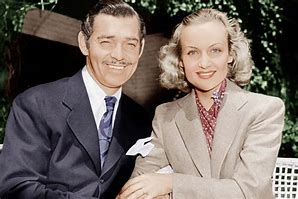
THE DAY CLARK & CAROL CRIED


3867

The year was 1938. Walt Disney and his crew of sketch and color artists, animators, cameramen, and sound people had just finished the innovative, “Snow White and the Seven Dwarfs.”


As Mr. Disney, (“Walt” to his employees) took his seat in Radio City Music Hall perspiration dripped from his brow, and he was filled with anxiety. Over the past three years hundreds of those whom he referred to as his “boys and girls” had produced 200,000 colorized sketches, spliced them into a seamless whole, and added sound; sound as rich as the color applied to the cartoon characters.


Before the feature length production began, Clark Gable and Carol Lombard entered the well-known theater, and sat down.


And the feature length film started.


From the opening scene Walt Disney sensed a dynamic in the building which he’d never before experienced. A bit of his anxiety dissipated, but he was not yet ready to congratulate himself. And then. And then, the climax. It was “make it or break it” time, and he knew it.


As Snow White received the apple from the wicked queen, bit into that awful fruit, and dropped to the floor


… silence.


As the heroine of the story lay stone dead, and laid out on a bier, and Doc, Dopey, Bashful, Grumpy, Sneezy, Sleepy and Happy wept great and copious tears, the audience reciprocated, and did the same! (It was reported that Clark Gable and Carol Lombard wept along with them).


Of course, as students of Disney filmology, you and I know that Snow White didn’t stay dead, but rather, our noble prince revived her with a kiss. And they rode off into the sunset. As heartbreaking as the initial reaction, so also was the joy of the subsequent response.


Applause! Cheers! Abject Joy!


“Snow White and the Seven Dwarfs” ran an almost unprecedented 5 weeks at Radio City, and was featured at many other theaters throughout the nation. During the course of its run, and as the most horrific scenes played out, young (and perhaps not so young) children wet the seat cushions, and some ran screaming from the theater. In today's revenue, the movie grossed over 100 million dollars.


… All for a cartoon!


In the heart of every man, woman and child exists, at least for a few brief moments in time, the wherewithal to suspend credulity in favor of something mythological and magical.


In a world as troubled as ours, we need a few more magic wands and flying carpets to transport us to places we otherwise might have never had the opportunity to visit. 

By William McDonald, PhD

Thursday, February 10, 2022

OUR PARTICIPATION

3866

A few years ago, I was watching an interview between an anchorman and a priest on FOX news, and the topic happened to be the late Pope, John Paul II, who had only just passed away.

The priest began to speak about the sufferings of the pope, how that after the assassination attempt he suffered pain the rest of his life, and as John Paul aged he developed Parkinson's Disease which proved to be extremely debilitating, as well. And yet for all his suffering, this priest continued to travel, and minister to his people.

Near the end of the interview the Catholic cleric quoted Colossians 1:24, "Filling up in my own body the unfinished sufferings of Christ."

And the newsman responded, "I don't understand. What is unfinished about Christ' sufferings?"

To which the kindly priest, with a sad twinkle in his eye, responded...

"…Our Participation.”

Too few believers grasp or appreciate the wherewithal we have been given to suffer with Him. Not that we desire it or seek it, but when it comes, we bear faithfully with it, and gladly participate in that unfinished suffering which He so nobly began

Bill McDonald, PhD

OH YES, HE CARES

3865

Romans 15:13 Now the God of hope fill you with all joy and peace in believing, that ye may abound in hope, through the power of the Holy Ghost.


I heard a story about a man who was imprisoned during Napoleon's reign. While sulking in his dungeon one day, he etched on the wall the words "Nobody Cares".

A few weeks later, through a crack in the dungeon floor, a little green shoot sprang forth, reaching toward the tiny ray of sunlight that came from his small prison cell window. The prisoner began giving a portion of his daily water to the little shoot and it began to grow. One morning the man awoke to a beautiful flower. A tear rolling down his face, he crossed out the words, "Nobody Cares" and replaced them with "God Cares."

The story goes on to tell that His devotion to the flower was reported to the Empress Josephine. She was so very moved that she convinced Napoleon to set the man free.

How many times do we feel like "Nobody Cares"? God has planted little shoots of hope in each and every one of our difficult circumstances -- do you know that? Perhaps we're stepping on them, not even noticing they exist. Perhaps we're pulling the shoots before they spring forth into beautiful flowers.

God wants us to be released from our prisons of despair. Look around! See what God has planted since the beginning of time especially for us today. Be encouraged!

Sunday, February 6, 2022

A SELFLESS YOUNG MAN


3864

Laura Hillenbrand, the author of “Seabiscuit” gave an interview sometime after her book was written, and had sailed to the top of the New York Times Best Seller List. I will never forget the book, or the interview.

I have long since misplaced my copy of the book, and I haven’t been able to locate the portion of the interview which contains the following account. As a result, it has been necessary for me to rewrite a summary of her words, from memory, in order to share the following story with you.

It seems that when Laura Hillenbrand was a little girl, she happened to be at the neighborhood pool one day; the same sort of activity I also used to enjoy. Well, after she had spent some time in the pool, a thunderstorm arose, and the majority of the children ran for cover, and settled onto a screened-in porch adjacent to the pool.

As the kids sat bare-legged on the floor, a well-meaning young man, a lifeguard, offered to read the children a poem; not just any poem, but one of the longest, and most poignant poems of all time, “The Rime of the Ancient Mariner.” You can imagine that many of the children opted to collect their things, and head off for home; in spite of the light rain and thunder. But Laura, and a few of her young companions remained, and were soon engrossed in the young man’s amazing tale.

The lifeguard read stanza after stanza of the poem, and the more he read, the more awe-inspiring were the words. The rain fell in droves now, and it seemed to Laura that the crack of lightning, and the boom of thunder served to accent the dark adjectives which so easily rolled off the young man’s lips.

You see, “The Rime of the Ancient Mariner” recounts the fictional voyage of a couple hundred unfortunate sailors on an old sailing ship. Not so different from the story of Paul in the Book of Acts, the ancient vessel is overcome by an intense storm, but in this case, there is  significant loss of life.

As the young fellow finished reading the poem, and put down the book, the children seemed to sit silently for a brief moment, as if to transcend the myriad of stanzas which had so transfixed them. And then it was time to head home.

Laura picked up her towel, and began the short walk to her house. In spite of the depth and darkness of the subject matter, this young girl, who left shallow footprints on that old dirt road which took her to her home, was suddenly very unlike the child who had sat down cross-legged on that cold tile floor less than an hour before.

Her very soul thrilled within her to realize, even at this young age, what she wished to do with her life; what she had to do with her life. As surely as the account of lightning in the old poem mirrored the actual lightning which enveloped the afternoon sky, Laura was filled to overflowing with insight. She would become an author.

And the world renown author commented at the end of this particular segment of the interview,

“I never knew the name of that young man who so selflessly offered to read to a few young children on a little porch by a neighborhood pool, but what he did for me that day, (though of course he had no way of knowing), the time and topic he shared with me that day, well, it made all the difference in my life.

“I would not have been the same person I am today. My life would not have turned out as it has… without the selfless contribution of that wonderful young man.”

by William McDonald, PhD

Tuesday, February 1, 2022

THE STORY OF MY REVOLUTIONARY WAR GRANDMOTHER

3863

My quadruple Great Grandparents Thomas and Susannah (Harrington) Hightower were living on the Tygar River near Spartanburg, South Carolina in 1780. Having heard the plea for additional manpower, Thomas joined Colonel Benjamin Roebuck’s Colonial Regiment. While he was away on military duty, a militia group referred to as Tories, those American colonists loyal to the King of England, stormed the Hightower homestead and burst into my ancient grandmother’s house.

Following is an account I have written based on the events of that evening:

Susannah had been helping her son, John, with a particularly long word from his reader, and content that he had mastered one page and moved on to the next, she sat down in her rocking chair by the fire.

Suddenly the front wooden door flew open. Even in the midst of this terrible war, custom won out and she had forgotten to lock the door. Standing before her were eight heavily armed men, wearing an all-too familiar, but hated uniform. Susannah screamed for the children to run to the cellar. She realized that this rude intrusion was certainly no courtesy call.

Grandmother Hightower immediately recognized the leader of this band of traitors to the cause of independence. Bill Cunningham was an unusually handsome man, but known far and wide for his viciousness and unyielding retribution. It was not for no reason he had been nicknamed “Bloody Bill,” a name he apparently relished.

When the major addressed her by name, Susannah felt a shiver creep slowly up her spine, and she felt faint.

“Mrs. Hightower. You needn’t be afraid. We’re not here to hurt you. Answer a question, and we’ll be on our way, and leave you and your children alone.”

Somehow Susannah doubted the sincerity of his words.

“I know your husband has joined that vagabond band of misfits who are determined to put an end to everything we hold dear in these colonies. Well, Ma’am, we’re not going to let that happen.”

My grandmother started to speak,

“Sir, I protest…”

Bloody Bill cut her off.

“You’re not in the position to protest anything. Sit back down… NOW!”

My brave, but equally wise grandmother dropped into the rocking chair, suddenly feeling as weak as water.

“There now. That’s good. May I call you, Susannah?”

And without waiting for a reply, he continued.

“Susannah, I need you to answer me one question. Where’s your husband?”

And contrary to his earlier promise, he asked another question.

“Cat got your tongue? Where’s your husband, and who is his commanding officer?”

Susannah cleared her throat and fear registered in her voice.

“Sir, I know who you are. And I know you’re up to no good. I have no intention whatsoever, in telling you where my husband is.”

Bloody Bill’s contemptuous smile now turned downwards in a frown, and then a scowl. He would not be manipulated by the likes of a frail, little woman.

“One more chance, ma dear… if you want to live.”

Susannah realized the stakes of this not so pleasant game, and she steeled herself for the inevitable.

In a voice just above a whisper, and with tears stinging her eyes now, she sealed her fate.

“I cannot… I cannot bring myself to tell you. I have been true to my husband these twenty years. I am not about to betray him now. Do what you want, but you’ll get no answer from me.”

Well, my friends. I would like to tell you that Bloody Bill Cunningham marched right out of there, and took his band of “n’er do wells” with him… He didn’t. Turning to his chief lieutenant, he screamed,

“I’ll have none of this. No Sir, I will not. Lieutenant Morrison, kill her! Do it now!”

A look of utter amazement possessed the officer. He reached for his sword, but his hand seemed frozen in mid-air. Bloody Bill was not used to having his orders delayed, and he jerked Morrison’s sword out of the scabbard, and raised it high above his head.

My ancient grandmother had only enough time to utter the few last words she would ever speak on this side of eternity. With arms wrapped tightly about herself, she closed her eyes, and bowed her head.

“God forgive you, Bloody Bill. Dear Lord receive my spirit.”

…And the deed was done.

And I hasten to remind you that this is but one story among multiplied thousands of similar stories, which include the ancestors of those assembled here today, and which have followed us throughout all our nation’s wars.

by William McDonald, PhD

(Following is a slightly different account of my 4x great Grandmother’s murder)

9-22-18

Hello and thank you for adding me to the Hightower Family page! I am Thomas and Susannah (Harrington) Hightower's 6th-great granddaughter. It's a pleasure to meet you.

I'm currently researching Susannah's death during the American Revolution. She is listed in the Historical Collections of the Joseph Habersham Chapter, DAR, Volume: Volume 1, Author: Lucy Cook Peel (Mrs. William L. Peel), Publication: Genealogical Publishing Co., Baltimore, Maryland, 1967-68, Note: Page 232: "The notorious Tory, Bill Cunningham, had his headquarters in a house not far from where Wellford is now situated. They would come and carry off their horses and other stock and destroy their provisions in the most wanton manner. She used to relate other barbarous deeds committed by Cunningham and his infamous band. After leaving this county he went to the northern portion of Greenville county, and was guilty of cruel acts.

He went to the home of Mr. Hightower, and because his wife would not, or could not, tell where her husband was concealed, compelled her to stand on a stump and riddled her body with bullets." She was murdered on the spot for not divulging her husband, Thomas Hightower Jr.'s whereabouts.

The only reference in the DAR book is from the Carolina Spartan of January 23, 1895, under the heading of “Tales of Long Ago.” I haven't seen a copy of this article yet (contacting Spartanburg SC library because this hasn't been digitized). Any help or information about Susannah would be appreciated! I'll share whatever I learn with the group.

Melissa Levesque

AN AMAZING TRUTH

 3862

"You've heard it said that in the heart of every man, woman and child is a space that only God can fill. But did you realize that in the heart of God, Himself is a space that only (insert your name) can fill."

(from the book, "Captivating")